The Future of Retail: Insights on Fully Autonomous Supermarkets
Nov 24, 2025
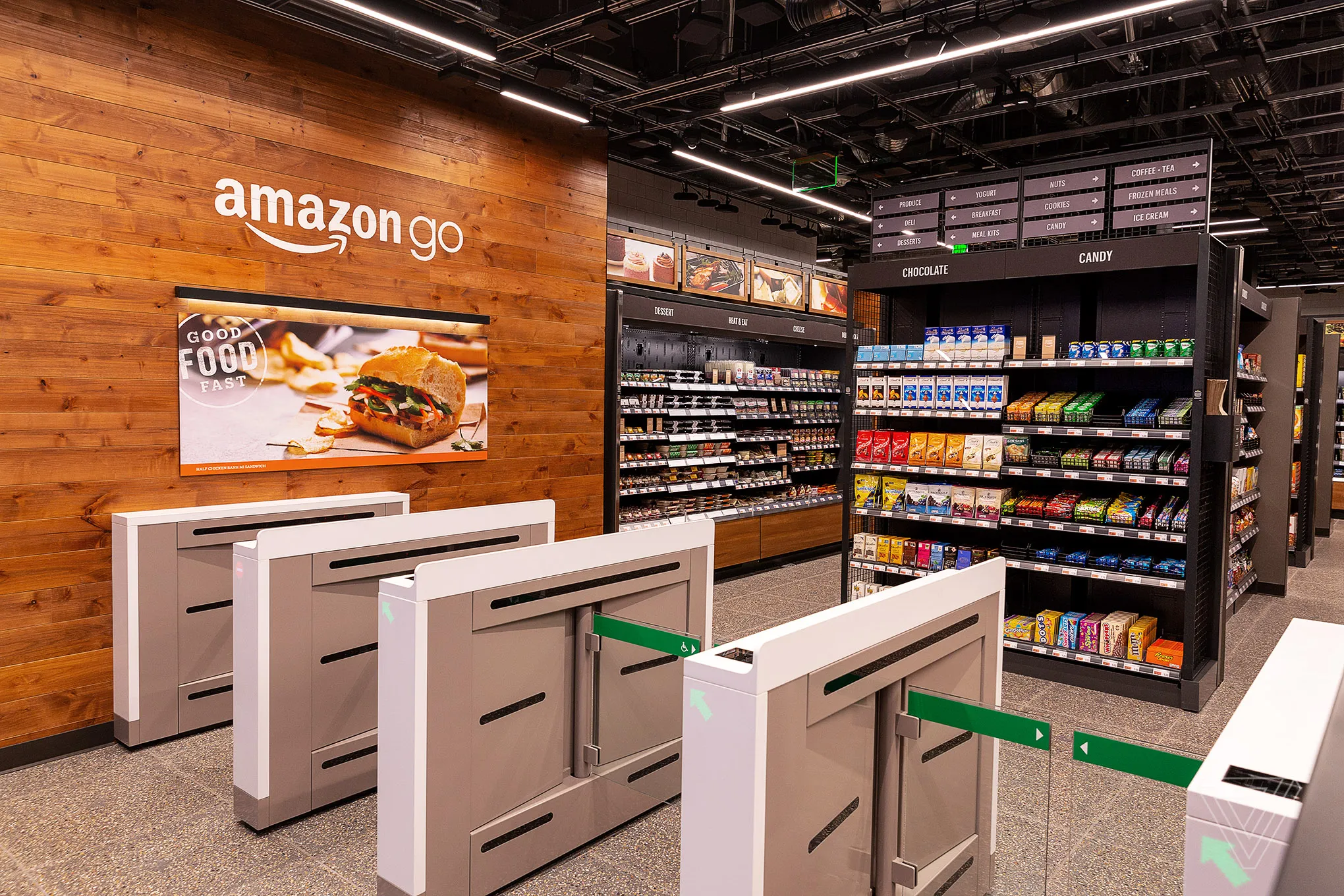
A strategic overview of how AI is reshaping retail by reducing costs, enhancing customer experiences, and enabling smarter, data-driven operations.
This article is based on a case study conducted by ArvosLabs for a multinational supermarket chain.
The global retail sector is undergoing one of the most significant transformations in its modern history. Advances in artificial intelligence, computer vision, sensor technology, and data infrastructure are converging to enable supermarket formats that were unthinkable just a decade ago. These innovations promise frictionless shopping, operational precision, and entirely new economic models for brick-and-mortar retail.
The insights presented in ArvosLabs’ study illuminate the strategic and technical considerations behind this evolution, offering a grounded view into how an autonomous supermarket might operate, what value it creates, and what challenges retailers must be prepared to navigate.
A New Paradigm: Seamless, Sensor-Driven Retail
In the emerging model of "Supermarket 4.0," shoppers move through the store without encountering any checkout process. Identification, product recognition, and payment occur automatically through an integrated system combining:
Computer vision for facial recognition and product detection
Load-cell shelves that detect weight changes
IoT controllers for real-time monitoring
Edge computing to process data with minimal latency
Integrated billing systems linked to mobile apps
The result is a customer journey designed to eliminate friction—the most persistent bottleneck in traditional retail—while enabling unprecedented operational visibility.
This is not theoretical. Companies like Amazon Go, AiFi, Standard AI, and Zippin have already demonstrated the viability of this model in mature markets. The challenge now is adapting it to different regulatory, cultural, and infrastructural environments.
Tangible Benefits Across the Value Chain
The study highlights several strategic advantages that retailers can expect when transitioning toward autonomous formats.
1. Reduced Operating Costs
Checkout automation alone can significantly lower direct labor expenses, freeing staff to focus on higher-value activities such as customer support, merchandising, and store operations. When combined with automated inventory tracking, loss prevention, and dynamic pricing, retailers gain a more efficient cost structure.
2. A Frictionless Customer Experience
Removing checkout lines fundamentally changes the shopping experience. Customers spend more time exploring products and less time waiting, which often correlates with increased basket size and higher store satisfaction. In global benchmarks, frictionless formats consistently show uplift in dwell time and average ticket value.
3. Operational Accuracy and Data-Driven Decisions
Real-time data collection produces a complete picture of customer behavior: which aisles attract the most movement, which products are frequently picked up and returned, and where stockouts and waste occur. This data empowers retailers to:
Optimize layouts
Improve forecast accuracy
Adjust promotions dynamically
Reduce shrinkage and spoilage
In effect, the supermarket becomes an always-on data engine.
4. Competitive Differentiation and Scalability
Once the digital infrastructure is established, expansion becomes significantly easier. New stores can be replicated with consistent architecture, hardware, and software flows—creating economies of scale that improve profitability and create a strong competitive moat.
The Technical Backbone of Autonomy
Implementing a fully autonomous supermarket requires substantial hardware and software investment. The study outlines the typical technology stack, including:
Hundreds of AI-enabled cameras
Thousands of shelf sensors
Edge computing units to process video and sensor fusion
Redundant storage solutions
Robust networking infrastructure
Secure entry and exit gates
For a 2,000 m² store, hardware alone can represent several million reais in capital expenditure. While costly, these investments lay the foundation for future scalability and automation across the retail footprint.
The report also notes that building such systems in-house is significantly more complex and expensive than partnering with a specialized global provider—an important consideration for multinational and regional retailers alike.
Strategic Considerations for Retailers
Beyond architecture and compliance, retailers must carefully evaluate:
1. Build vs. Partner Decisions
Developing a fully autonomous system internally is costly and risky. Global solution providers offer faster deployment and lower technical burden, but adapting their systems to local regulations, languages, and operational realities presents its own challenges.
2. Integration with Existing Infrastructure
Legacy POS systems, ERPs, CRMs, and supply chain tools must integrate seamlessly with new systems. A misalignment here can create friction that undermines the entire model.
3. Pilots Before Full Deployment
A controlled pilot environment allows retailers to validate customer adoption, system performance, regulatory compliance, and ROI before scaling.
4. Long-Term Operational Readiness
Maintenance, data accuracy, and continuous model calibration are essential for sustainability. Retailers must have clear governance structures to manage this new technological ecosystem.
The Bigger Picture: Retail’s Inevitable Transformation
The insights reflected in ArvosLabs’ study signal a broader trend: supermarkets are evolving from labor-intensive, manually monitored environments into intelligent, sensor-rich ecosystems. As AI capabilities improve and hardware becomes more affordable, frictionless retail will transition from novelty to mainstream expectation.
For retailers, the question is no longer if this transformation will arrive, but how quickly they can prepare their organizations to adopt it.
Those who modernize early will set new benchmarks for efficiency, customer experience, and profitability. Those who delay may find themselves competing at a structural disadvantage.